Defensible IV Room Cleaning. Documented. Validated. Inspection-Ready.
Most facilities don’t fail inspections because they lack cleaning policies—they fail because they cannot prove execution, consistency, and competency.
Where Facilities Fail During Inspection
Recent State Board of Pharmacy and Joint Commission inspections continue to cite the same preventable failures—not due to lack of policy, but lack of execution and defensible documentation.
Inconsistent or undocumented IV room cleaning
Lack of sporicidal agent documentation and rotation
No verification that cleaning is performed correctly
EVS or pharmacy staff cleaning without competency validation
Logs completed after the fact and not inspection-defensible
Under USP <797> (2023) and TSBP Rule 291.133, facilities must demonstrate:
Cleaning is performed as required
Personnel are trained and competency validated
Documentation is complete, accurate, and retrievable during inspection
We Convert Cleaning Into a Defensible Compliance System
RigorRx provides independent, third-party validation of your IV room cleaning and disinfection program.
We do not replace your EVS or pharmacy staff.
We ensure:
Cleaning is performed correctly
Processes are standardized
Documentation is inspection-ready
Your facility can defend its practices under survey
Monthly On-Site Validation
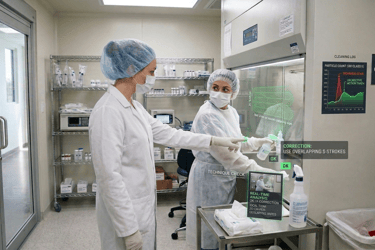
Observation and verification of IV room cleaning
ISO-classified areas, PECs, and high-touch surfaces
Immediate correction of deficiencies
Sporicidal Compliance Oversight
Defensible Documentation
Process Standardization
Verification of EPA-registered sporicidal use
Frequency and rotation aligned with USP <797>
Elimination of common compliance gaps
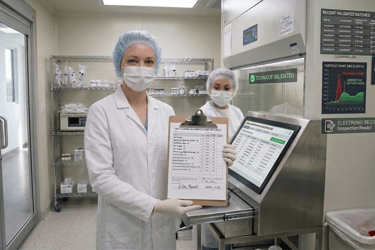
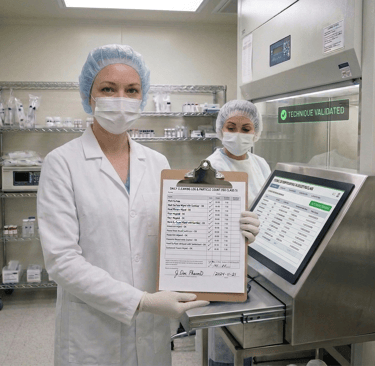
Completed cleaning logs (not templates—executed records)
Timestamped validation records
Inspection-ready documentation systems
Alignment with USP <797> (2023)
Alignment with TSBP Rule 291.133
Integration with infection control expectations
How It Works
Step 1 — Assessment
Review current cleaning practices, logs, and products used


Step 2 — Validation
Observe or perform cleaning with real-time correction

Step 3 — Documentation
Generate defensible, inspection-ready records


Step 4 — Standardization
Implement repeatable processes aligned with USP <797>
Get Ahead of Your Next Inspection
Identify gaps before surveyors do. Strengthen your documentation. Reduce your risk.
Contact
Reach out for consultation requests.
Phone
(956) 579-5425
© 2025. All rights reserved.